



What happens when the court where you earned your greatest triumphs is also the site of your deepest trauma?
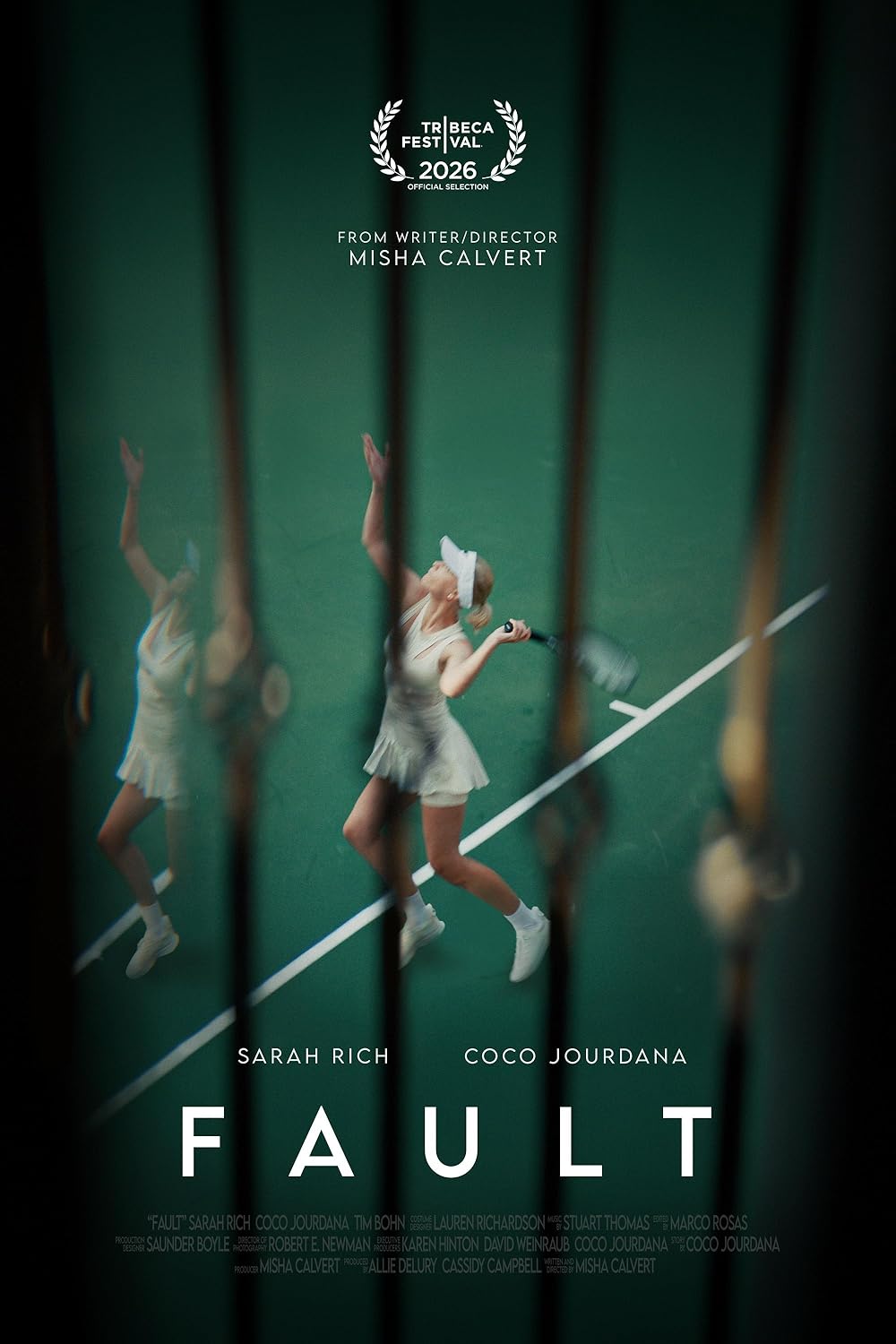
In Fault, a gripping psychological sports drama that recently made its premiere at the prestigious Tribeca Film Festival, director and writer Misha Calvert uses the high-stakes world of competitive tennis to serve up a searing exploration of childhood abuse, survival, and sisterhood.
Calvert brings 25 years of theater experience—dating back to her roots directing off-Broadway adaptations of Chekhov—and a decade of filmmaking expertise to the project. Her transition from acting to writing and directing was born out of necessity, driven by the limited opportunities available for female directors and the persistent challenges regarding financial stability and creative agency for women in theater.
With Fault, Calvert seizes that agency completely, delivering a film that subverts traditional Hollywood trauma narratives by turning the camera entirely away from the perpetrator.
From Real Trauma to Visual Metaphor
The genesis of Fault is deeply personal. Two and a half years ago, actress Coco Jordana (who plays Gigi) approached Calvert with a painful family situation involving widespread abuse. Wanting to help Jordana process this experience through art without forcing her to re-live the literal trauma on camera, Calvert looked to the sports world.
By utilizing competitive tennis as a visual metaphor, Calvert created a narrative distance that allowed Jordana to safely explore the themes without living out her actual family trauma, while simultaneously addressing the broader, very real issues of abuse within professional sports.
Directing a project where the lead actress is processing real-life trauma required an airtight approach to emotional safety. Calvert relied on constant instinctual monitoring and regular “temperature checks” on set to protect her cast, particularly during emotionally bruising scenes between Jordana and co-star Sarah. The structured environment of the tennis court provided a physical boundary that helped the actors safely step into character and step back out when the cameras stopped rolling.
The Fragmented Nature of Healing
One of the film’s most compelling elements is its refusal to present a neat, monolithic view of survival. Instead, Fault explores how two sisters process the exact same abuse in wildly different ways. Gigi expresses her trauma openly, appearing volatile and at times even villainous to the outside world. Meanwhile, her sister Stephanie suppresses her pain, fighting desperately to maintain a veneer of normalcy.
The initial portrayal of Gigi as an antagonist was a deliberate narrative choice. It accurately reflects how abuse victims often misplace blame, directing anger at their siblings or peers rather than recognizing the coach or abuser as the true source of the destruction.
The climax of the film sees the sisters shattering Steph’s hard-earned tennis trophies—a striking visual symbol of dismantling the entire toxic empire built on their pain.
Flipping the Script on Female Representation
Historically, cinematic stories about abuse focus heavily on the perpetrator, detailing their crimes and inadvertently centering the male gaze. Calvert made the intentional decision to push the abuser completely out of the frame.
This pivot addresses a severe underrepresentation of women in film. By focusing entirely on the female victims, the narrative ensures that the story belongs completely to the survivors, shifting the spotlight away from centering male perpetrators.
It is a message that resonates deeply with audiences and creators alike. For Calvert, Fault is only the beginning. True to her philosophy of filmmaking, she rarely creates short-form content unless it has the legs to expand into a feature film or a television show.
Currently, Calvert has a couple of feature film scripts in development, with the definitive goal of having at least one feature film in active production by next year. If Fault is any indication of what is to come, Calvert is well on her way to rewriting the rules of independent cinema—one powerful, survivor-led story at a time.
