


The Earth, Wind, and Fire documentary that premiered at Tribeca hit me in a way I did not expect. Questlove did not make a film that tries to polish the group’s legacy or wrap their story in nostalgia. He made something honest. Something personal. Something that finally says out loud what shaped this band and the man who built it.
From the opening moments, you can feel that Questlove is not interested in myth-making. He is interested in understanding how a group this influential came to be and what it cost the people inside it.
Maurice White’s Childhood Is the Key to Everything
The film does not tiptoe around Maurice White’s early life. It goes straight into the part of his story that most people never talk about.
Maurice was five years old when his mother, Edna, left him in Memphis to move to Chicago for work. Five. That kind of abandonment does not fade with time. Big Mama, the woman who stepped in and raised him, becomes the emotional center of his childhood, and the documentary treats her with the respect she deserves.
When Edna returned almost thirteen years later and moved Maurice to Chicago, it was not a warm reunion. It was a shock. Suddenly, he was meeting the family she had built without him, including Verdine and Fred White, who would eventually become the backbone of Earth, Wind, and Fire. The film lets that moment sit. You feel how that early wound shaped the way Maurice handled relationships for the rest of his life. If he sensed someone might leave, he would cut them off first.
Questlove does not judge him for it. He just shows the pattern and lets you understand the man behind the music.
Watching the Group Evolve Is One of the Best Parts of the Film
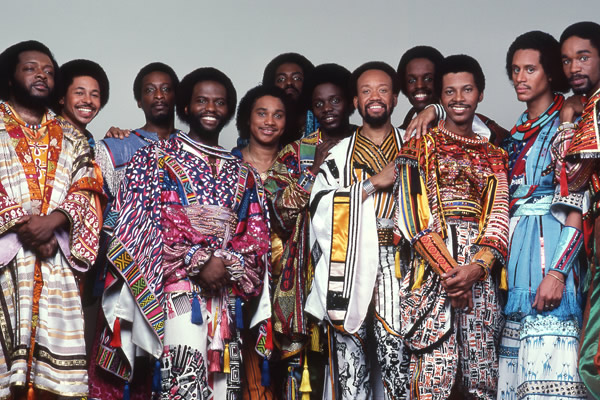
The documentary does a great job showing how Earth, Wind, and Fire kept reinventing themselves. The early version of the group was rooted in African rhythms and spiritual imagery. Then Maurice started pushing them toward something bigger and more futuristic. The horns, the harmonies, the choreography, the costumes, the staging. None of it was random. Maurice was building a universe.
But the film also makes it clear that all that innovation came with a price. Earth, Wind, and Fire were operating at a financial loss for most of their peak years. The spectacle that made them iconic also made them expensive. Eventually, Maurice had to make the call to end the group because it was no longer financially possible to keep going.
Their attempts to come back in the mid 1980s and early 1990s could not outrun the industry’s obsession with new faces. And when Parkinson’s disease forced Maurice to stop performing, the man who spent decades chasing perfection finally had to slow down.
That slowdown gave him something he had been missing for years. His family. His son KB talks about how every Sunday, he and his father would sit and listen to whatever music KB thought was hot at the time. Those moments lasted until Maurice passed away in 2016. It is one of the most human parts of the film.
The Legacy Is Still Alive and Still Powerful
The documentary makes it clear that Earth, Wind, and Fire are not a nostalgia act. They are a blueprint. Philip Bailey, Verdine White, and Ralph Johnson still tour as a trio, and the film treats them like the carriers of a living tradition.
And the influence is still everywhere. Stevie Wonder. Michael Jackson. Prince. Artists who changed the shape of music were studying Earth, Wind, and Fire like it was a textbook. The film does not brag about this. It just shows the impact.
The Music Still Works Because It Was Built to Make You Feel Something
The film also digs into the emotional range of their catalog. Songs that made you fall in love. Songs that made you feel unstoppable. Songs that made you feel joy in your chest.
And then Phillip Bailey casually reveals that “Reasons” is not a love song at all. It is about a one-night stand. The audience’s reaction to that moment says everything.
Earth, Wind, and Fire made music that felt like life. Messy. Joyful. Complicated. Spiritual. Sensual. That is why it still hits.
The documentary also featured commentary from Barack and Michelle Obama, Stevie Wonder, Lionel Richie, H E R, Flea, Maurice’s long-time life partner, Marilyn White, their son KB White, fellow bandmates Phillip Bailey, Verdine White, Ralph Johnson, and archival footage of Maurice himself.
As of June 7th,” Earth, Wind & Fire: To Be Celestial vs That’s the Weight of the World” is available to stream on HBO Max.
