


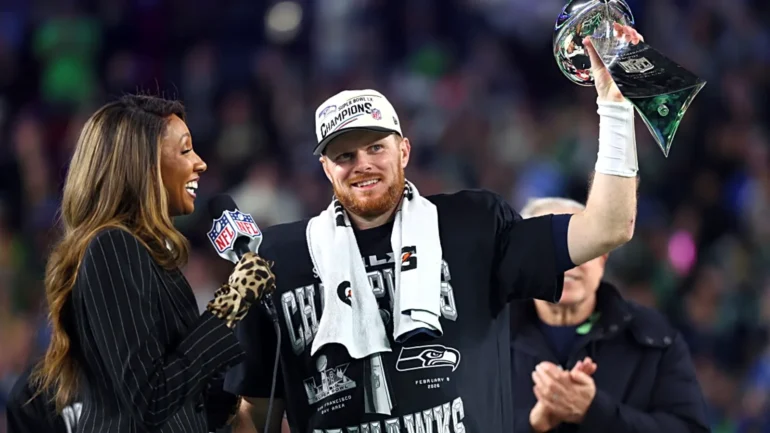
The Seattle Seahawks didn’t just win their second Super Bowl — they imposed their will on a New England Patriots team that never found its footing. What unfolded at Levi’s Stadium was less a back‑and‑forth title fight and more a four‑quarter demonstration of what happens when a defense hits its peak at the exact right moment.
Below is a full breakdown of the game, Bad Bunny’s halftime takeover, and where this Seahawks team fits in the broader NFL hierarchy.
How Seattle Took Control of Super Bowl LX
Seattle beat New England 29–13, a score that actually undersells how lopsided the night was. The Seahawks’ defense suffocated Drake Maye from the opening drive, sacking him six times and forcing three turnovers, a performance that set the tone and never let the Patriots breathe.
Jason Myers did something no kicker had ever done on this stage: he hit five field goals, a Super Bowl record that kept Seattle in command even when drives stalled.
Sam Darnold didn’t need to be spectacular — he needed to be steady — and that’s exactly what he delivered with 202 passing yards and a touchdown, while Kenneth Walker III took over the game on the ground with 135 rushing yards, earning him Super Bowl MVP honors.
By the time the fourth quarter arrived, Seattle’s defense had broken New England’s protection schemes entirely. The Patriots’ lone touchdown came in garbage time, long after the outcome was decided. This wasn’t revenge for the Malcolm Butler interception; it was closure.
Bad Bunny’s Halftime Performance: A Cultural Flashpoint
Bad Bunny’s halftime show was always going to be a moment — the only question was what kind. What he delivered was a 13‑minute, fully Spanish‑language performance, the first of its kind on the Super Bowl stage.
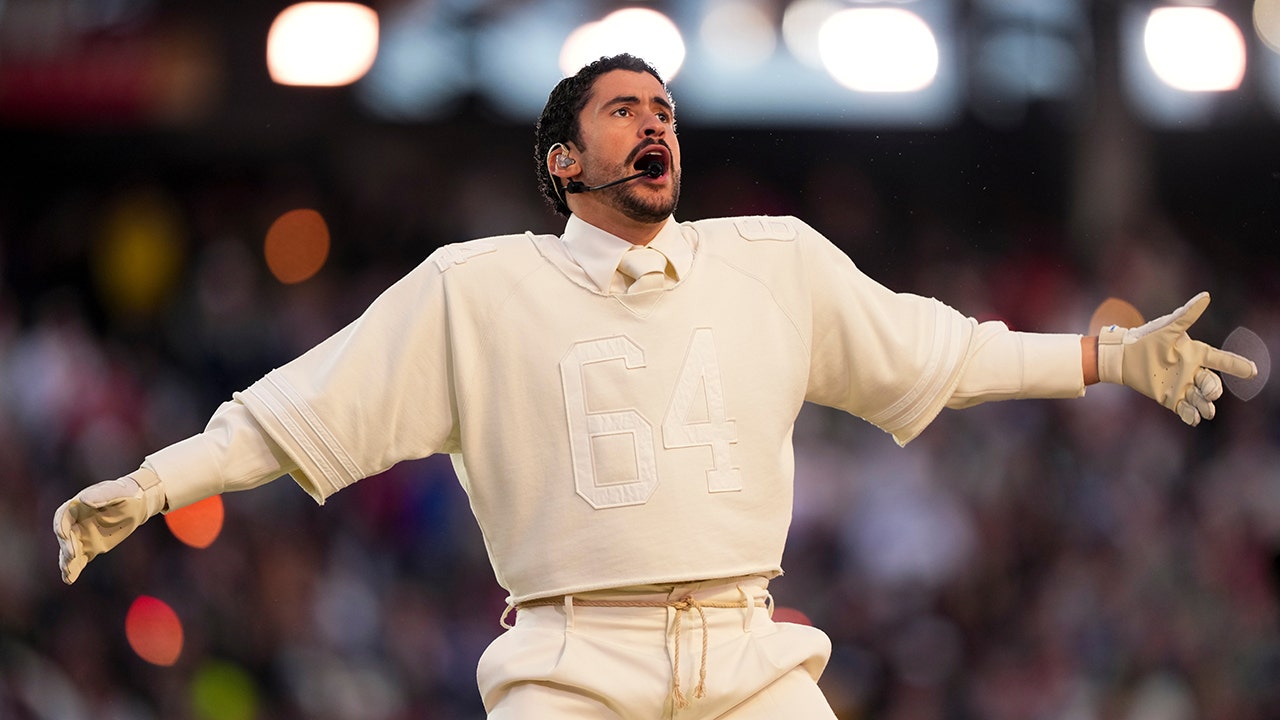 He opened with “Tití Me Preguntó,” moved into “Yo Perreo Sola,” and built the set around Puerto Rican cultural imagery. Lady Gaga and Ricky Martin joined him, turning the field into a cross‑generational, cross‑genre collision that felt engineered to make a statement rather than chase nostalgia.
The reaction online was immediate — and divided.
Celebrities like Kacey Musgraves and Tom Brady praised the performance, calling it “amazing” and “history‑making.”
At the same time, conservative commentators and MAGA‑aligned voices blasted the show, framing it as overly political or culturally “out of place” for the Super Bowl stage.
In other words: the performance did exactly what Bad Bunny intended — it sparked conversation, not consensus.
Where This Seahawks Team Ranks in NFL History
Seattle didn’t stumble into this championship. They entered the postseason as the NFC’s top seed, a 14‑win team with the league’s best defense.
Their Super Bowl performance wasn’t a one‑off outlier — it was the final chapter of a season defined by defensive consistency, a revitalized offense, and a coaching staff that maximized every piece on the roster.
So where do they rank historically?
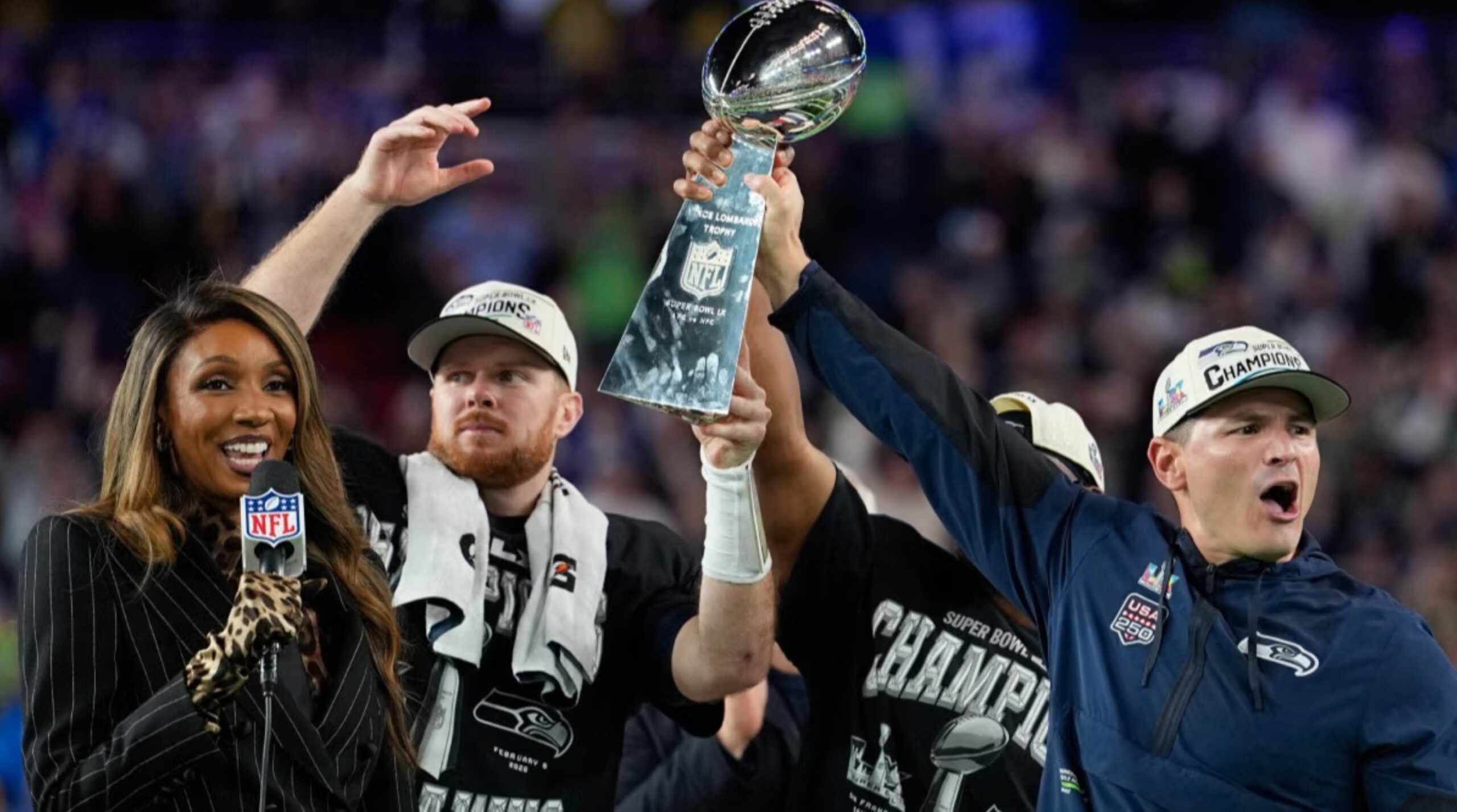
They’re not the 1985 Bears or the early‑2000s Patriots — those dynasties lived in a different tier. But they belong in the conversation with the best single‑season champions of the modern era: teams like the 2013 Seahawks, the 2015 Broncos, and the 2019 Chiefs.
This was a complete team with a clear identity, a dominant defense, and a postseason run that left no doubt. Seattle didn’t just win a championship. They authored a season that will be referenced every time a defense starts terrorizing the league again.
